
What Wildlife Can I See on a Tanzania and Uganda Safari?
Tanzania and Uganda Safari Wildlife | Animals, Parks & 14–18 Day Tours
A Tanzania and Uganda safari offers one of the most rewarding wildlife experiences in East Africa. In one journey, you can encounter mountain gorillas in Uganda’s mist-covered forests, chimpanzees moving through tropical woodland, elephants crossing open savannah, lions resting beneath acacia trees and enormous herds of wildebeest travelling across Tanzania’s Serengeti plains.
The two countries complement each other beautifully. Tanzania is famous for classic African game viewing, the Big Five and the Great Migration, while Uganda is particularly special for primates, forest wildlife, savannah animals and birdlife.
Whether you are planning your first African safari, a family holiday, a photography adventure or a longer wildlife journey, combining Tanzania and Uganda allows you to experience a remarkable variety of habitats and species.
This guide explores the wildlife you can see in both countries, the best national parks to visit, the animals to look out for, the best seasons and sample 14-, 15-, 16- and 18-day Tanzania and Uganda safari itineraries.
Why Is a Tanzania and Uganda Safari Special for Wildlife Lovers?
Tanzania and Uganda offer different wildlife experiences, which is why combining them creates such a diverse safari.
In Tanzania, you can explore vast grasslands, volcanic landscapes, woodland and seasonal wetlands. These habitats support large populations of herbivores and predators. The Serengeti, in particular, is famous for its annual migration of wildebeest, zebras and gazelles, followed by predators.
Uganda offers a different experience. Its tropical forests provide habitat for mountain gorillas, chimpanzees and numerous monkey species, while its savannah parks support elephants, lions, buffaloes, giraffes, antelopes and hippos.
A combined safari may therefore include:
- Mountain gorilla trekking in Bwindi Impenetrable National Park.
- Chimpanzee trekking in Kibale Forest.
- Lion and leopard sightings in Tanzania and Uganda.
- Elephant herds in Serengeti, Tarangire and Queen Elizabeth National Park.
- The Great Migration in Tanzania, depending on the season.
- Hippos and crocodiles along rivers and channels.
- Hundreds of bird species, including colourful forest birds and large waterbirds.
The experience is not just about how many animals you see. It is also about observing wildlife in different natural environments and understanding how each species lives.
Wildlife You Can See in Tanzania
Tanzania is one of Africa’s leading safari destinations. Its northern safari circuit is particularly popular because several outstanding wildlife areas can be combined into one itinerary.
-
Lions
Lions are among the most exciting animals to encounter on a Tanzania safari. They can often be seen resting in the shade, walking across open grassland or watching herds of grazing animals.
The Serengeti is especially well known for its lion population and predator-prey interactions. Lions may also be seen in Ngorongoro Crater and Tarangire, although sightings depend on location, season and luck.
Early morning and late afternoon game drives can provide excellent opportunities to observe their behaviour.
-
African Elephants
Elephants are among the most memorable animals on an African safari. Tanzania’s Tarangire National Park is especially famous for its elephant herds and baobab landscapes.
Visitors may see elephants feeding, drinking, moving between woodland and river areas or gathering in family groups. The park’s seasonal water sources make it particularly interesting during drier months.
Elephants can also be encountered in the Serengeti and Ngorongoro Conservation Area.
-
Leopards
Leopards are beautiful but elusive predators. They are usually more difficult to spot than lions because they are solitary, often well camouflaged and may rest in trees or thick vegetation.
The Serengeti is a good place to look for leopards, particularly around riverine woodland and rocky areas known as kopjes. A skilled safari guide can help visitors look for movement, tracks and other signs.
-
Cheetahs
Cheetahs are famous for their speed and distinctive spotted coats. Unlike leopards, they often prefer open grassland where they can watch grazing animals and scan the surrounding plains.
The Serengeti’s open landscapes offer opportunities to see cheetahs, especially in areas with suitable prey and visibility.
-
African Buffaloes
African buffaloes are powerful herbivores that often move in herds. They are an important part of Tanzania’s savannah ecosystem and can be seen in the Serengeti, Ngorongoro and Tarangire.
Large buffalo herds are particularly impressive when they gather around grazing areas or water sources.
-
Black Rhinoceros
The black rhinoceros is one of Africa’s most threatened large mammals. Seeing one in the wild is a special experience because these animals are relatively rare and carefully protected.
Ngorongoro Crater is one of the best-known places in Tanzania to look for black rhinos. However, sightings are not guaranteed, and visitors should follow the guide’s instructions and observe them from a respectful distance. The Ngorongoro Conservation Area Authority describes the crater as supporting the Big Five, including black rhinos.
-
Wildebeest and Zebras
The wildebeest and zebra migration is one of Tanzania’s most famous wildlife spectacles.
Large herds move through the Serengeti ecosystem in search of fresh grazing and water. Their movement is influenced by rainfall and seasonal vegetation, so the best location for viewing them changes during the year.
Travelers may see:
- Blue wildebeest.
- Plains zebras.
- Thomson’s gazelles.
- Grant’s gazelles.
- Elands and other grazing antelopes.
The migration also attracts predators such as lions, cheetahs, leopards and hyenas. The Serengeti is recognized by UNESCO for its extraordinary migration and ecological importance.
UNESCO World Heritage Centre+1
-
Giraffes
Giraffes are among the easiest animals to recognize on a Tanzania safari. Their height allows them to feed on leaves high above the ground, particularly in woodland and acacia habitats.
Visitors may encounter giraffes in Serengeti, Tarangire and other northern Tanzania wildlife areas.
-
Hippos and Crocodiles
Rivers and waterholes provide important habitats for hippos and crocodiles.
Hippos are often seen resting in water during the day, while crocodiles may be observed along riverbanks. In the Serengeti, rivers are important wildlife areas, particularly during the migration seasons.
-
Hyenas and Other Predators
Spotted hyenas are intelligent social predators and scavengers. They are an important part of the ecosystem and may be seen near herds, along roads or around areas where predators have made a kill.
Jackals and other smaller carnivores also contribute to Tanzania’s wildlife diversity.
Wildlife You Can See in Uganda
Uganda is sometimes called the Pearl of Africa, and its wildlife diversity is one of the reasons. Its national parks protect tropical rainforests, wetlands, lakes, rivers, mountains and open savannah.
For visitors combining Uganda with Tanzania, the country’s most memorable wildlife experiences often include mountain gorillas, chimpanzees and classic African savannah animals.
-
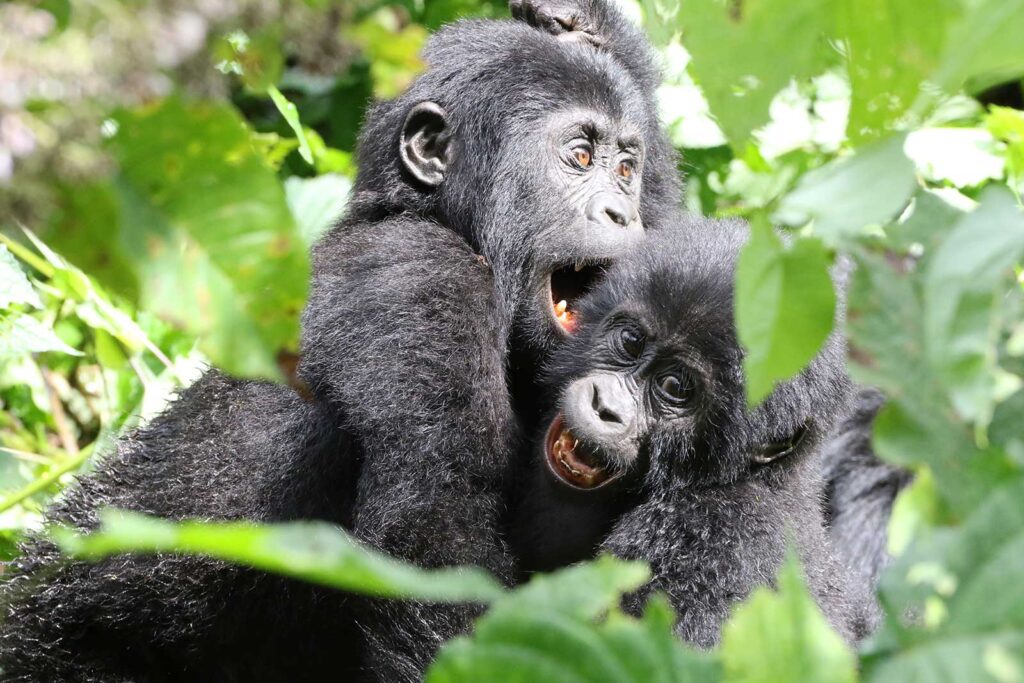
Mountain Gorillas
Mountain gorillas are among Uganda’s most treasured wildlife attractions. They live in the forested mountains of Bwindi Impenetrable National Park and Mgahinga Gorilla National Park.
Gorilla trekking involves walking through forest with trained guides and trackers to visit a habituated gorilla family. The experience offers an opportunity to observe these remarkable primates as they feed, rest, groom and interact with one another.
Bwindi is particularly popular because it has several habituated gorilla groups available for trekking, subject to permit availability. Visitors should book permits in advance and follow all wildlife viewing rules.
A gorilla encounter is not guaranteed, as these are wild animals moving freely through their natural habitat.
-
Chimpanzees
Uganda is one of the best-known destinations in East Africa for chimpanzee trekking. Kibale Forest National Park is the country’s leading destination for visitors hoping to see chimpanzees in their natural environment.
Chimpanzees are highly social primates. Visitors may observe them calling, feeding, moving through trees, grooming and interacting with other members of their community.
Other chimpanzee tracking destinations include Kyambura Gorge in Queen Elizabeth National Park and Budongo Forest near Murchison Falls.
-
Golden Monkeys
Golden monkeys are colourful primates found in the Virunga mountain region. In Uganda, they can be tracked in Mgahinga Gorilla National Park.
Their golden-orange coats make them particularly attractive to photographers. They are often found feeding and moving through bamboo forest, making the tracking experience different from mountain gorilla trekking.
Travelers interested in both gorillas and golden monkeys can discuss adding Mgahinga to a longer Uganda safari.
-
African Elephants
Uganda has both savannah and forest elephants. Visitors on a traditional wildlife safari are more likely to encounter savannah elephants in parks such as Queen Elizabeth and Murchison Falls.
In Queen Elizabeth National Park, elephants may be seen around open grassland, woodland and water sources. A boat cruise along the Kazinga Channel can also provide excellent opportunities to observe elephants coming to drink.
-
Lions
Lions are among Uganda’s most popular safari animals. They can be seen in Queen Elizabeth National Park and Murchison Falls National Park.
The Ishasha sector of Queen Elizabeth National Park is particularly famous for occasional sightings of tree-climbing lions. These lions are known for resting in large fig trees, although this behavior is not guaranteed to be seen on every visit.
Murchison Falls also offers opportunities to look for lions during guided game drives.
-
Leopard
Leopards are present in some of Uganda’s savannah parks, including Queen Elizabeth and Murchison Falls. They are elusive animals and can be difficult to locate because of their camouflage and mainly solitary behavior.
Early morning and evening game drives may offer opportunities to see them.
-
Uganda Kob and Other Antelopes
The Uganda kob is one of the country’s best-known antelopes and appears on Uganda’s national coat of arms.
It is commonly associated with open grasslands and can be seen in Queen Elizabeth and Murchison Falls national parks.
Other antelopes visitors may encounter include:
- Waterbuck
- Topi
- Bushbuck
- Impala, particularly at Lake Mburo
- Oribi
- Eland
- Reedbuck
- Duiker
The variety depends on the park and habitat being explored.
-
Rothschild’s Giraffes
Murchison Falls National Park is an excellent destination for visitors hoping to see Rothschild’s giraffes.
These giraffes are a distinctive subspecies with pale lower legs. They can often be spotted browsing on trees in the northern part of the park, together with elephants, buffaloes, Uganda kob and other wildlife.
-
Hippos and Nile Crocodiles
Uganda’s rivers and lakes support large populations of aquatic wildlife.
The Kazinga Channel in Queen Elizabeth National Park is famous for boat cruises that offer opportunities to see hippos, crocodiles, buffaloes, elephants and many waterbirds.
The Nile in Murchison Falls National Park is another important wildlife area. Boat trips provide opportunities to observe hippos and crocodiles along the riverbanks.
-
Birds and Shoebills
Uganda is an excellent destination for birdwatching. Its forests, wetlands, rivers and savannahs support a wide range of bird species.
Some notable birds include:
- Shoebill
- African fish eagle
- Grey crowned crane
- Great blue turaco
- African jacana
- Kingfishers
- Hornbills
- Sunbirds
- Various weavers and bee-eaters
Mabamba Swamp near Entebbe is particularly well known for shoebill excursions. Other birding opportunities can be found in Bwindi, Kibale, Queen Elizabeth and Murchison Falls.
Which National Parks Are Best for Wildlife Viewing?
Choosing the right parks is important because no single destination offers every wildlife experience. The following are some of the strongest options for a combined Tanzania and Uganda safari.
| National park | Country | Wildlife highlights |
| Serengeti National Park | Tanzania | Lions, leopards, cheetahs, elephants, wildebeest, zebras, buffaloes and hyenas |
| Ngorongoro Conservation Area | Tanzania | Big Five opportunities, hippos, hyenas, zebras, wildebeest and gazelles |
| Tarangire National Park | Tanzania | Elephants, lions, buffaloes, giraffes, antelopes and birdlife |
| Lake Manyara National Park | Tanzania | Elephants, baboons, hippos, giraffes, birds and other wildlife |
| Bwindi Impenetrable National Park | Uganda | Mountain gorillas, forest elephants, monkeys and forest birds |
| Kibale Forest National Park | Uganda | Chimpanzees, red colobus, mangabeys and other primates |
| Queen Elizabeth National Park | Uganda | Lions, elephants, buffaloes, hippos, crocodiles, Uganda kob and birds |
| Murchison Falls National Park | Uganda | Giraffes, elephants, lions, buffaloes, Uganda kob, hippos and crocodiles |
| Lake Mburo National Park | Uganda | Zebras, impalas, elands, giraffes, buffaloes and hippos |
| Mgahinga Gorilla National Park | Uganda | Mountain gorillas, golden monkeys and other forest wildlife |
The Serengeti, Ngorongoro and Tarangire are part of Tanzania’s well-established northern safari circuit. In Uganda, Queen Elizabeth, Bwindi and Kibale can be combined into a western Uganda wildlife and primate route.
Can I See the Big Five on a Tanzania and Uganda Safari?
Yes. A Tanzania and Uganda safari can include opportunities to see all five animals traditionally known as the Big Five:
- Lion – A major attraction in Serengeti and several other savannah parks.
- Leopard – Present in suitable woodland and savannah habitats, but often difficult to spot.
- African elephant – Seen in parks such as Tarangire, Serengeti and Queen Elizabeth.
- African buffalo – Common in several wildlife areas in both countries.
- Rhinoceros – Ngorongoro is one of Tanzania’s best-known places to look for black rhinos.
Ngorongoro Crater is particularly recognized for Big Five viewing opportunities. However, no safari operator can guarantee sightings of all five animals. Rhinos and leopards can be especially challenging to find.
Uganda’s Ziwa Rhino Sanctuary also offers a rhino tracking experience, which can be considered if you want to include rhinos during the Uganda section of your trip. This requires additional planning and should be checked against the route and current visitor arrangements.
What Is the Great Migration, and When Can I See It?
The Great Migration is one of Africa’s most impressive wildlife movements. Large numbers of wildebeest, zebras and gazelles move through the Serengeti ecosystem in search of fresh grazing and water.
Predators such as lions, cheetahs, leopards and hyenas follow the herds, creating opportunities for dramatic wildlife viewing.
The migration moves throughout the year, and its location depends on rainfall and grazing conditions. Broadly:
| Period | General migration pattern |
| January–March | Southern Serengeti and Ndutu region are often important for the calving season |
| April–May | Herds generally move north-west and through central or western areas |
| June–July | Western and northern movements may be important, with river crossings possible |
| August–October | Northern Serengeti is often a key area for herds and possible Mara River crossings |
| November–December | Herds generally move back towards the southern plains |
These are seasonal patterns, not fixed appointments. River crossings are unpredictable, and travellers should not plan on a crossing happening on a particular day.
UNESCO World Heritage Centre+1
Popular Tanzania and Uganda Wildlife Safari Itineraries
The following itineraries combine Tanzania’s famous northern safari circuit with Uganda’s best wildlife and primate destinations. They are sample routes that can be adjusted according to travel dates, flight schedules, accommodation preferences and permit availability.
For these examples, the Uganda section includes gorilla trekking, chimpanzee trekking and savannah wildlife viewing. The Tanzania section includes Tarangire, Ngorongoro and Serengeti.
14-Day Tanzania and Uganda Wildlife Safari
| Day | Destination | Wildlife experience |
| 1 | Entebbe, Uganda | Arrival and overnight |
| 2 | Kibale Forest | Transfer through Uganda’s countryside |
| 3 | Kibale Forest | Chimpanzee trekking and forest primates |
| 4 | Queen Elizabeth National Park | Transfer and evening wildlife viewing |
| 5 | Queen Elizabeth | Game drive and Kazinga Channel boat cruise |
| 6 | Bwindi Impenetrable Forest | Transfer through the scenic southwest |
| 7 | Bwindi | Mountain gorilla trekking |
| 8 | Entebbe | Return transfer or domestic flight |
| 9 | Entebbe to Arusha | Flight to Tanzania |
| 10 | Tarangire | Elephants, giraffes and other savannah wildlife |
| 11 | Ngorongoro | Transfer to the crater highlands |
| 12 | Ngorongoro Crater | Crater game drive |
| 13 | Serengeti | Game drive and wildlife viewing |
| 14 | Tanzania | Return transfer or flight for departure |
Best for: Travellers who want a compact introduction to Uganda’s primates and Tanzania’s classic wildlife parks.
15-Day Tanzania and Uganda Safari
| Day | Destination | Wildlife experience |
| 1 | Entebbe | Arrival |
| 2 | Kibale Forest | Transfer to Kibale |
| 3 | Kibale Forest | Chimpanzee trekking |
| 4 | Queen Elizabeth | Transfer and wildlife viewing |
| 5 | Queen Elizabeth | Game drive and boat cruise |
| 6 | Bwindi | Transfer to gorilla trekking region |
| 7 | Bwindi | Mountain gorilla trekking |
| 8 | Lake Mburo | Zebras, impalas and other wildlife |
| 9 | Entebbe | Return transfer |
| 10 | Arusha, Tanzania | Regional flight and overnight |
| 11 | Tarangire | Elephant and savannah wildlife viewing |
| 12 | Ngorongoro | Crater game drive |
| 13 | Serengeti | Transfer and wildlife viewing |
| 14 | Serengeti | Full-day game drive |
| 15 | Tanzania | Return transfer or flight for departure |
Best for: Visitors who want to include Lake Mburo and enjoy a little more variety in Uganda before travelling to Tanzania.
16-Day Uganda and Tanzania Wildlife Safari
| Day | Destination | Wildlife experience |
| 1 | Entebbe | Arrival |
| 2 | Murchison Falls | Transfer and overnight |
| 3 | Murchison Falls | Game drive and Nile boat cruise |
| 4 | Kibale Forest | Transfer to Kibale |
| 5 | Kibale Forest | Chimpanzee trekking |
| 6 | Queen Elizabeth | Transfer and wildlife viewing |
| 7 | Queen Elizabeth | Game drive and Kazinga Channel cruise |
| 8 | Bwindi | Transfer to Bwindi |
| 9 | Bwindi | Mountain gorilla trekking |
| 10 | Entebbe | Return transfer or domestic flight |
| 11 | Arusha, Tanzania | Flight and overnight |
| 12 | Tarangire | Elephant and predator viewing |
| 13 | Ngorongoro | Transfer to crater highlands |
| 14 | Ngorongoro Crater | Full-day crater game drive |
| 15 | Serengeti | Game drive |
| 16 | Tanzania | Return transfer or flight for departure |
Best for: Travellers who want a more comprehensive Uganda wildlife experience, including Murchison Falls, chimpanzees, gorillas and Queen Elizabeth National Park.
18-Day Tanzania and Uganda Wildlife Safari
| Day | Destination | Wildlife experience |
| 1 | Entebbe | Arrival |
| 2 | Murchison Falls | Transfer to the national park |
| 3 | Murchison Falls | Game drive and Nile boat cruise |
| 4 | Kibale Forest | Transfer through western Uganda |
| 5 | Kibale Forest | Chimpanzee trekking |
| 6 | Queen Elizabeth | Transfer to the park |
| 7 | Queen Elizabeth | Game drive and Kazinga Channel cruise |
| 8 | Ishasha | Search for tree-climbing lions |
| 9 | Bwindi | Transfer to the gorilla trekking region |
| 10 | Bwindi | Mountain gorilla trekking |
| 11 | Lake Mburo | Wildlife viewing and overnight |
| 12 | Entebbe | Return transfer |
| 13 | Arusha, Tanzania | Flight to Tanzania |
| 14 | Tarangire | Elephants and savannah wildlife |
| 15 | Ngorongoro | Crater game drive |
| 16 | Serengeti | Transfer and wildlife viewing |
| 17 | Serengeti | Full-day game drive |
| 18 | Tanzania | Return transfer or flight for departure |
Best for: Wildlife enthusiasts who want a comprehensive East African experience, combining Uganda’s primates and savannah wildlife with Tanzania’s iconic game parks.
Itinerary planning note: These are sample schedules. The 14- and 15-day options are relatively fast-paced, and some transfers may require domestic flights or careful scheduling. The 18-day itinerary is more comfortable for including several Ugandan parks. The final departure day should be matched to the actual flight timetable, with an extra overnight where necessary.
Best Time to See Wildlife in Tanzania and Uganda
Both countries offer wildlife viewing throughout the year, but the season can influence animal movements, road conditions, photography and the type of experience available.
| Period | Uganda | Tanzania |
| January–February | Often a favourable period for forest trekking and savannah safaris | Southern Serengeti calving season is an important attraction |
| March–May | Rainier months; forest trails can be muddy | Long rains in many areas; some roads and safari conditions can be challenging |
| June–August | Popular period for gorilla trekking and wildlife safaris | Popular dry-season safari period |
| September–October | Good opportunities for primate and savannah experiences | Excellent general wildlife viewing in many northern parks |
| November–December | Short rains in many areas; wildlife viewing continues | Green season and changing migration movements |
For visitors interested in the Great Migration, the northern Serengeti is often considered during August to October, while the southern plains are important around the calving season. These patterns vary from year to year.
For Uganda, gorilla and chimpanzee trekking are available throughout the year, subject to permit availability and park conditions.
What Wildlife Experiences Can You Enjoy on a Combined Safari?
A Tanzania and Uganda safari is about more than simply spotting animals from a vehicle. There are several ways to experience the natural environment.
Gorilla trekking
Walk through Uganda’s rainforest with trained guides and trackers to visit a habituated mountain gorilla family.
Chimpanzee trekking
Explore Kibale Forest or another approved tracking location to observe wild chimpanzees.
Traditional game drives
Travel through Tanzania’s and Uganda’s savannah parks in a safari vehicle, looking for predators, elephants, giraffes, antelopes and other animals.
Boat safaris
Enjoy wildlife viewing from the water along the Kazinga Channel or the Nile in Murchison Falls National Park. Hippos, crocodiles, elephants and waterbirds are among the animals you may encounter.
Birdwatching
Both countries offer excellent birdwatching opportunities. Uganda is particularly rewarding for forest and wetland birds, while Tanzania’s Serengeti and Tarangire offer impressive savannah birdlife.
How Much Does a Tanzania and Uganda Wildlife Safari Cost?
The cost of a combined safari depends on the number of days, accommodation category, group size, park fees, gorilla and chimpanzee permits, transport and regional flights.
The following are broad indicative planning estimates per person, not confirmed package quotations.
| Safari duration | Estimated budget | Mid-range | Luxury |
| 14 days | US$4,500–6,000 | US$6,000–9,000 | US$10,000+ |
| 15 days | US$4,800–6,500 | US$6,500–9,500 | US$11,000+ |
| 16 days | US$5,200–7,000 | US$7,000–10,000 | US$12,000+ |
| 18 days | US$6,000–8,000 | US$8,000–12,000 | US$14,000+ |
Actual prices can be higher depending on the season, lodge selection, private flights and group size. International flights, visas, travel insurance and personal expenses may be excluded.
Before booking, request a detailed quotation showing accommodation, permits, park fees, transport, meals, flights and other inclusions.
What Should You Pack for a Tanzania and Uganda Wildlife Safari?
Because this safari combines tropical forests with open savannah, it is useful to pack for different conditions.
Recommended items include:
- Comfortable walking shoes for forest trekking.
- Lightweight long-sleeved shirts and trousers.
- A waterproof jacket for rainforest conditions.
- Comfortable safari clothing.
- A sun hat and sunscreen.
- Insect repellent.
- Binoculars for spotting distant wildlife.
- A camera with spare batteries and memory cards.
- A small daypack.
- Reusable water bottle.
- Personal medication and travel essentials.
For gorilla and chimpanzee trekking, sturdy footwear and clothing suitable for walking through forest vegetation are particularly useful. Listen carefully to your guides and maintain the required distance from wildlife.
Frequently Asked Questions About Tanzania and Uganda Safari Wildlife
-
What animals can I see on a Tanzania and Uganda safari?
You may see mountain gorillas, chimpanzees, golden monkeys, lions, leopards, elephants, buffaloes, rhinos, giraffes, zebras, wildebeest, hippos, crocodiles, hyenas and many bird species.
The animals you encounter depend on the parks visited, season and natural wildlife movements.
-
Can I see the Big Five in Tanzania?
Yes. Tanzania offers opportunities to see lions, leopards, elephants, buffaloes and rhinos. Ngorongoro Crater is particularly well known for Big Five viewing opportunities, although sightings are never guaranteed.
-
Can I see gorillas and the Great Migration on one safari?
Yes. You can combine mountain gorilla trekking in Uganda’s Bwindi Impenetrable National Park with the Great Migration in Tanzania’s Serengeti.
The itinerary should be planned around the expected migration location and the availability of gorilla trekking permits.
-
Is Uganda better than Tanzania for wildlife?
Both countries offer different strengths. Uganda is particularly famous for mountain gorillas, chimpanzees and forest biodiversity. Tanzania is especially well known for the Serengeti, Ngorongoro, the Great Migration and large savannah wildlife populations.
Combining both countries offers a wider range of experiences than choosing only one.
-
Which country is better for seeing elephants?
Both countries offer excellent opportunities. Tarangire National Park in Tanzania is particularly famous for elephants, while Uganda’s Queen Elizabeth and Murchison Falls national parks are also rewarding destinations.
-
Where can I see chimpanzees in Uganda?
Kibale Forest National Park is the leading destination for chimpanzee trekking. Other options include Kyambura Gorge in Queen Elizabeth National Park and Budongo Forest near Murchison Falls, depending on permit arrangements and availability.
-
Can I see tree-climbing lions in Uganda?
Yes, Queen Elizabeth National Park’s Ishasha sector is famous for tree-climbing lion sightings. However, the behaviour is not guaranteed, and lions may also be found resting or moving through the grassland.
-
How many days are enough for a Tanzania and Uganda safari?
Fourteen days can provide a good introduction to both countries. Fifteen or sixteen days allows more flexibility, while eighteen days is a better option for travellers who want to visit several Ugandan national parks and spend more time in Tanzania.
-
Is a Tanzania and Uganda safari suitable for families?
Yes. A combined safari can be a rewarding family experience, but activities have different age restrictions. Gorilla and chimpanzee trekking have minimum age requirements, so families should confirm the applicable rules before booking. Other game drives and boat safaris may offer suitable alternatives depending on the ages of the travellers.
-
Are wildlife sightings guaranteed?
No. Wildlife moves freely through natural habitats, and sightings depend on weather, season, animal movements and other environmental conditions. Experienced guides improve the chances of finding animals, but no responsible safari operator should promise a particular sighting.
Final Thoughts: Discover the Wildlife of Tanzania and Uganda
A Tanzania and Uganda safari brings together some of East Africa’s most remarkable wildlife experiences. From mountain gorillas and chimpanzees in Uganda’s tropical forests to lions, elephants, rhinos and wildebeest on Tanzania’s open plains, the journey offers extraordinary diversity.
For visitors interested in the Big Five and the Great Migration, Tanzania provides exceptional opportunities. For those who dream of seeing mountain gorillas and chimpanzees in their natural habitats, Uganda adds a truly special dimension.
A 14-day safari is a good introduction, while 16 or 18 days allows more time to explore the different parks without rushing through the experience.
The best trip is one designed around the wildlife you most want to see, the season you plan to travel and the amount of time available.
Start planning your Tanzania and Uganda wildlife safari with gorillatrips.net. Our team can help you combine Uganda’s primate forests with Tanzania’s famous wildlife parks into an itinerary suited to your interests, travel dates and budget