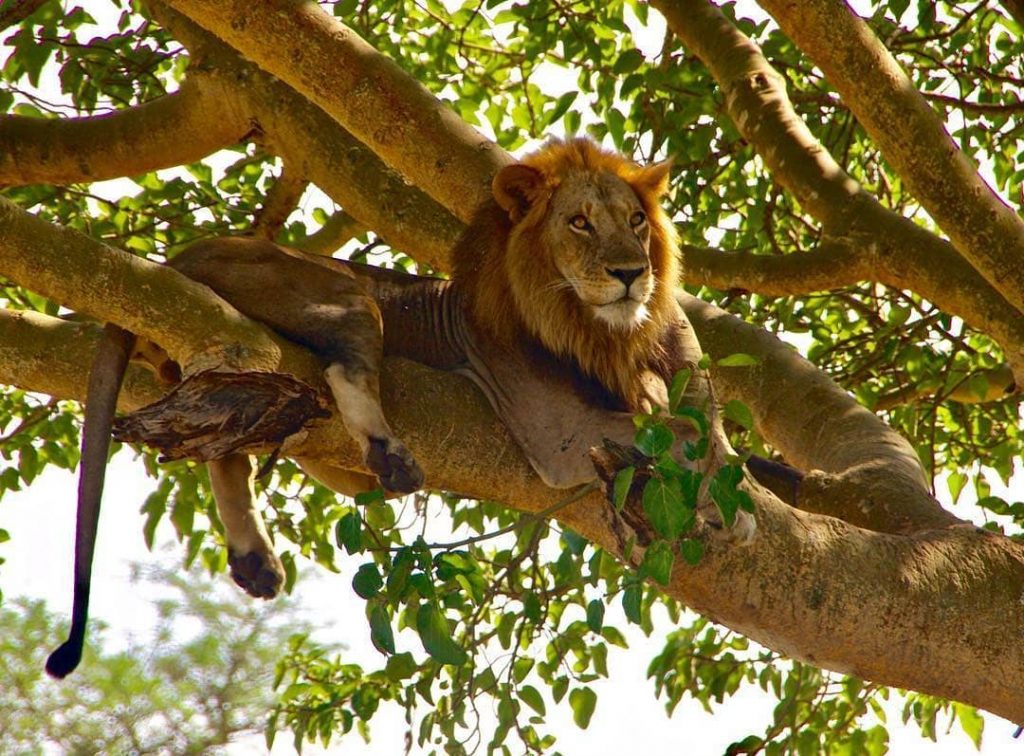
Discovering the Tree-Climbing Lions of Ishasha Sector, Queen Elizabeth National Park
The Ishasha Sector of Queen Elizabeth National Park in Uganda is a remarkable destination, renowned for its unique population of tree-climbing lions. These majestic predators exhibit extraordinary behaviors that set them apart from their counterparts in other regions, captivating wildlife enthusiasts and researchers alike. Visitors from around the globe flock to this area to witness this extraordinary phenomenon, showcasing the adaptability of nature in the face of environmental challenges.
The Enigma of Tree-Climbing Lions
Among the most striking characteristics of the tree-climbing lions in Ishasha is their impressive ability to scale the branches of large fig trees. Unlike lions found on open savannahs, these lions have evolved to seek refuge and rest high above the ground. This behavior not only offers them a strategic vantage point for observing potential prey but also allows them to enjoy a respite from the heat and avoid pesky insects. The sight of a lion lazily lounging in a tree is truly unforgettable, contrasting sharply with the typical image of lions resting in tall grasses.
Behavior and Social Structure
Despite their unique arboreal habits, the tree-climbing lions of Ishasha maintain many of the same social dynamics as their savannah-dwelling relatives. They live in cohesive prides, typically led by a dominant male, and engage in group hunting behaviors. Their diet mainly consists of ungulates, such as antelope and buffalo, but their ability to navigate both terrestrial and arboreal environments distinguishes them as a remarkable population within the park.
Research into the behavior of these lions has provided insights into their adaptability and resilience in response to environmental challenges. Some experts theorize that climbing trees may serve multiple purposes—beyond merely escaping the heat, it could enhance their hunting efficiency. The elevated positions allow them to survey their surroundings, improving their chances of spotting potential prey.
Conservation Efforts in Ishasha Sector
In recent years, concerted efforts to conserve the habitat of the tree-climbing lions have gained momentum. Recognizing the importance of preserving this unique ecological phenomenon for future generations, conservationists are dedicated to safeguarding the forests and savannahs of the Ishasha Sector. Through responsible tourism practices and habitat protection initiatives, they aim to ensure that these magnificent predators continue to thrive in their treetop domain.
How to Access the Ishasha Sector
Located on the southwestern edge of Queen Elizabeth National Park, Ishasha is a destination that attracts travelers interested in wildlife experiences, including chimpanzee trekking and birdwatching. Accessing Ishasha by road is straightforward, although it requires some travel time. It is approximately a full day’s drive from Entebbe or Kampala, four hours from Fort Portal, two hours from the park’s core area, and six hours from Lake Mburo National Park.
Travelers can conveniently incorporate Ishasha into their itineraries en route to Bwindi Impenetrable National Park or the Mweya area, known for its gorilla trekking opportunities. A knowledgeable tour guide can assist in arranging stops to observe the iconic tree-climbing lions, which can often be spotted lazily resting in the branches while keeping watch over the abundant Uganda kobs.
Accommodation Options in Ishasha Sector
To fully experience the beauty of the Ishasha Sector and its unique wildlife, consider staying overnight in the area. Ishasha Jungle Lodge is an excellent choice, situated in Kanungu District along Kameme Road, just two kilometers from the Katokye Gate of Queen Elizabeth National Park. Here, guests can enjoy a bush breakfast before continuing their adventures.
Another delightful option is River Lodge, an eco-camp located in the southern part of the park. This affordable accommodation provides opportunities to observe a variety of wildlife, including white colobus monkeys, red-tailed monkeys, and over 1,000 species of birds. For those seeking a lodge on the outskirts of the Ishasha sector, Enjojo Lodge is a fantastic choice. From this location, visitors can easily spot abundant herds of elephants, antelopes, buffaloes, and an array of bird species. The lodge offers accommodation suitable for various budgets, featuring comfortable self-contained rooms with classic bathrooms and private verandas.
The Best Time to Visit Ishasha Sector
Ishasha welcomes visitors throughout the year; however, the most favorable views of the tree-climbing lions typically occur during the wet months of April, May, and early December. In contrast, the drier months, spanning from June to October and January to March, offer a different perspective of the landscape.
Among the many attractions that draw travelers to Queen Elizabeth National Park—located in southwestern Uganda across the districts of Kamwenge, Kasese, Rukungiri, and Rubirizi—the tree-climbing lions stand out. These elusive predators are primarily found in the Ishasha sector, situated in the southern region of the park. Tree-climbing lions are rare and not easily encountered elsewhere. They are unique to Uganda’s Queen Elizabeth National Park and the southern region of Tanzania, particularly in Lake Manyara.
As part of Africa’s “big five” animals, the tree-climbing lions hold a significant place among wildlife enthusiasts. In addition to these lions, Queen Elizabeth National Park is home to a rich diversity of wildlife, including African buffaloes, elephants, chimpanzees, hippos, zebras, antelopes, waterbucks, and bushbucks, among others. Visitors can enjoy these incredible wildlife sightings through various activities, such as game drives, hot air balloon safaris, or boat cruises along the Kazinga Channel.
Accessing the Tree-Climbing Lions in Ishasha Sector
The tree-climbing lions of the Ishasha sector can be accessed via both road and air transport from various parts of Uganda. The journey from Kampala to Queen Elizabeth National Park involves approximately a 7-8 hour drive through Mbarara, Fort Portal, and Kasese District. This route leads to the southern wing of the park, home to the tree-climbing lions.
For travelers on a Uganda safari, the Ishasha sector is easily reachable from several tourism destinations. For example, travelers departing from Bwindi Impenetrable Forest National Park can access Ishasha via the Kihihi-Buhoma route, which takes about 3-4 hours to drive. From the Mweya Peninsula of Queen Elizabeth National Park, it is roughly a 2-hour drive to connect to the Ishasha sector using a 4×4 safari vehicle.
Alternatively, travelers can opt for air transport. Flights from Kajjansi Air Strip in Entebbe can land at Kihihi Airstrip. From there, a 3-4 hour drive leads visitors to the Ishasha sector, where they can marvel at the tree-climbing lions.
Why Do Lions Climb Trees?
The reasons behind the tree-climbing behavior of the Ishasha sector lions are multi-faceted. During the dry season, when temperatures soar and shade is scarce, these majestic predators seek refuge in the lush foliage of fig trees. However, their climbing habits are not solely limited to avoiding the heat.
The branches of acacia and fig trees serve as ideal resting spots for lions after a long day of hunting. These elevated perches provide a sense of security and a prime vantage point for surveying the landscape. From the treetops, lions can keenly observe the movements of prey species that roam the savannah grasslands of Ishasha. Their elevated positions enable them to spot potential targets, including Uganda kobs, impalas, zebras, and other game animals.
The Best Time to Witness Tree-Climbing Lions
While visits to observe the tree-climbing lions are possible year-round, the dry season is particularly recommended for an exceptional experience. This period, characterized by minimal rainfall, allows for easier navigation along the roads leading to the Ishasha sector. During the rainy season, the routes can become muddy and slippery, making safari excursions challenging.
In the dry season, the intense heat encourages the tree-climbing lions to seek refuge in the trees, providing visitors with fantastic opportunities to see them up close. The short, dry, open savannah grasslands enhance visibility, making it easier to spot these incredible animals resting high in the branches.
In conclusion, the tree-climbing lions of Ishasha sector stand as a primary draw for many travelers to Queen Elizabeth National Park. These unique lions, known for their arboreal habits, are a rare find, with few parallels outside of Uganda’s Queen Elizabeth and Tanzania’s Lake Manyara. Embarking on a Uganda safari with Saso Uganda Safaris allows you to uncover the unique wonders of the Pearl of Africa, creating unforgettable memories amid the wild beauty of the African jungle.