
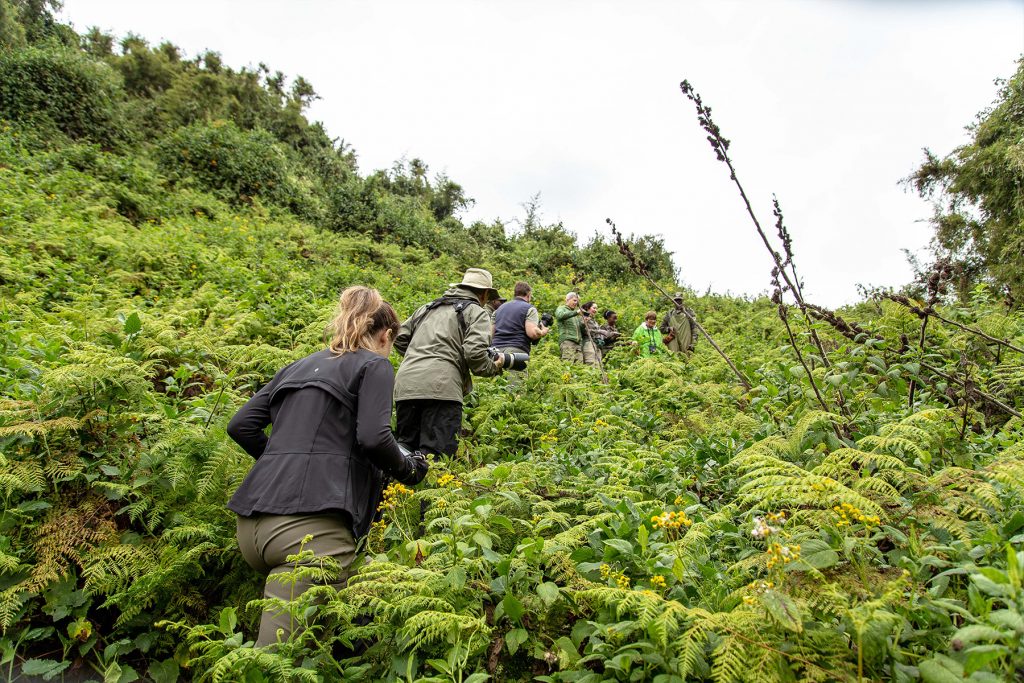
How Big is a Gorilla Trekking Group?
How Big is a Gorilla Trekking Group? Gorilla trekking is an extraordinary wildlife experience that allows travelers to observe mountain gorillas in their natural habitat. In both Uganda and Rwanda, this activity is strictly regulated to ensure the safety of both the gorillas and the visitors. One of the key regulations pertains to the size of trekking groups.
Group Size Regulations
In Uganda, only eight visitors are permitted to track a single gorilla family per day. This policy is enforced to minimize human impact on the gorillas and to enhance the quality of the experience for trekkers. The same limit applies in Rwanda, where trekking groups are also capped at eight individuals.
These group sizes are designed to ensure that each trekker has ample opportunity to observe the gorillas without causing them distress. Smaller groups are less likely to disrupt the natural behaviors of the gorillas, leading to a more authentic and respectful encounter.
Trekking Experience
The trekking experience begins early in the morning, with visitors meeting at the park headquarters for a briefing. Afterward, groups are assigned to specific gorilla families based on their physical abilities and preferences. The hike can vary in difficulty, ranging from a gentle walk to a more strenuous trek through dense vegetation.
Once a gorilla family is located, trekkers are allowed a one-hour period to observe and photograph the gorillas. During this time, it’s crucial to maintain a respectful distance and follow the guidelines set by the park authorities to ensure both human and gorilla safety.
Combining Gorilla Trekking with Other Safari Activities
For those interested in experiencing more than just gorilla trekking, both Uganda and Rwanda offer a variety of other wildlife and cultural activities. In Uganda, visitors can explore national parks like Queen Elizabeth and Murchison Falls for classic wildlife safaris, or visit Kibale Forest for chimpanzee tracking. Rwanda offers additional attractions such as Nyungwe Forest for chimpanzee trekking and Lake Kivu for relaxation.
Combining gorilla trekking with these activities can provide a well-rounded safari experience, showcasing the rich biodiversity and cultural heritage of the region. Many tour operators offer packages that include multiple destinations and activities, allowing travelers to customize their itineraries to suit their interests.
Conclusion
Understanding the regulations regarding group sizes in gorilla trekking is essential for planning a responsible and enjoyable safari. By adhering to these guidelines, trekkers contribute to the conservation efforts that protect these magnificent animals and ensure that future generations can experience the wonder of observing mountain gorillas in the wild.
Whether you’re embarking on a Uganda safari or a Rwanda tour, the opportunity to engage in gorilla trekking is a once-in-a-lifetime experience that offers a profound connection with nature. By respecting the established group sizes and guidelines, you help preserve the integrity of this remarkable adventure for all.