
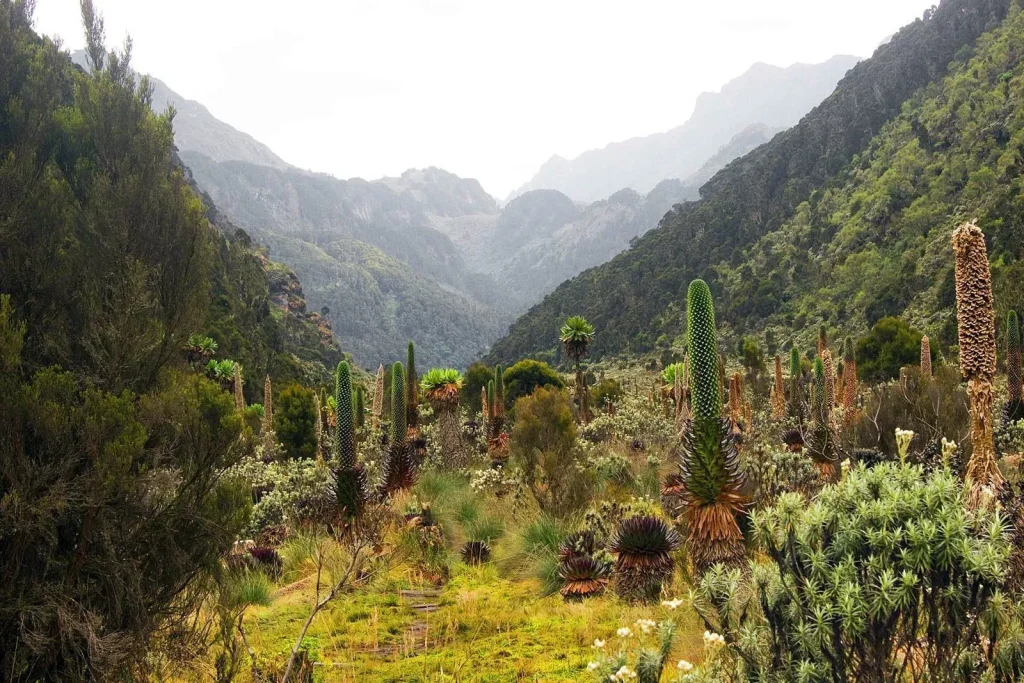
Understanding the Climate of the Rwenzori Mountains: A Comprehensive Guide
The Rwenzori Mountains, often referred to as the “Mountains of the Moon,” offer a spectacular but challenging environment for trekkers. Located on the border between Uganda and the Democratic Republic of Congo, these mountains are renowned for their unique climate, which varies dramatically with altitude and weather conditions. Understanding the climate of the Rwenzori Mountains is crucial for anyone planning a trek up to Margherita Peak or combining a Mount Rwenzori hike with gorilla trekking in Uganda.
Climate Zones of the Rwenzori Mountains
Lower Montane Zone: The Rainforest Realm
The lower montane zone, located at altitudes between 1,800 to 3,000 meters (5,900 to 9,800 feet), is characterized by lush rainforests and high humidity. This zone provides the initial experience of the Rwenzori climate and is essential for trekkers to understand.
- Temperature and Humidity: Temperatures in the lower montane zone typically range from 15°C to 20°C (59°F to 68°F). The area experiences high humidity and frequent rainfall, contributing to its dense, tropical rainforest environment.
- Weather Patterns: Rainfall is a common feature, with heavy showers occurring throughout the year. Trekkers should be prepared for wet and muddy conditions, making waterproof gear essential.

Rwenzori Mountains National Park
Upper Montane Zone: The Moorland Highlands
As trekkers ascend, they enter the upper montane zone, situated between 3,000 to 4,000 meters (9,800 to 13,100 feet). This zone transitions from rainforest to moorland and alpine meadows, with distinct climatic changes.
- Temperature and Conditions: Temperatures in the upper montane zone drop to between 5°C and 15°C (41°F to 59°F). The weather becomes more variable, with cooler temperatures and less humidity compared to the lower montane zone.
- Precipitation: Rainfall continues, but the intensity often decreases. However, trekkers should still be prepared for sudden showers and chilly weather, especially at higher elevations.
Alpine Zone: The Glacial Heights
The alpine zone, above 4,000 meters (13,100 feet), is characterized by its cold temperatures, glacial conditions, and exposure to the elements. This zone includes the glacial peaks and high-altitude terrains of the Rwenzori Mountains.
- Temperature Extremes: Temperatures in the alpine zone can plummet below freezing, ranging from -5°C to 5°C (23°F to 41°F). The cold, combined with strong winds and high altitudes, presents significant challenges for climbers.
- Weather and Glaciers: The alpine zone experiences snow and ice conditions, particularly around Margherita Peak. Trekkers should be prepared for freezing temperatures, ice, and snow, requiring specialized cold-weather gear and equipment.
Best Time to Hike the Rwenzori Mountains
Dry Seasons: Ideal Trekking Periods
The Rwenzori Mountains experience two main dry seasons, which are the best times to plan your hike. These periods offer relatively stable weather conditions, reducing the likelihood of heavy rainfall and making trekking more manageable.
- December to February: The first dry season, occurring from December to February, is characterized by less rainfall and warmer temperatures. This period is ideal for trekking, as the trails are less muddy and visibility is generally good.
- June to August: The second dry season, from June to August, also provides favorable conditions for trekking. This period is marked by relatively dry weather and clearer skies, making it a popular time for climbers aiming to reach Margherita Peak.

Rwenzori Mountains National Park
Rainy Seasons: Preparing for Challenges
The Rwenzori Mountains experience two rainy seasons, which can significantly impact trekking conditions. Understanding these periods helps trekkers prepare for the challenges associated with heavy rainfall and muddy trails.
- March to May: The long rainy season from March to May brings frequent and heavy showers, leading to muddy trails and challenging trekking conditions. This period requires careful planning and preparedness for wet conditions.
- September to November: The short rainy season, occurring from September to November, also involves increased rainfall and slippery trails. While trekking is still possible, trekkers should be prepared for the wet conditions and potential for fog and reduced visibility.
Preparing for the Rwenzori Climate
Clothing and Gear
Proper clothing and gear are essential for managing the diverse climate of the Rwenzori Mountains. Trekkers should be equipped to handle varying temperatures and weather conditions.
- Layering System: Utilize a layering system that includes moisture-wicking base layers, insulating mid-layers, and waterproof outer layers. This system allows for flexibility and adjustment based on changing weather conditions.
- Cold-Weather Gear: Invest in high-quality cold-weather gear, including insulated jackets, gloves, and hats. Specialized gear for high-altitude conditions, such as crampons and ice axes, is also necessary for those climbing Margherita Peak.
Acclimatization and Health
Acclimatization is crucial for adapting to the high-altitude environment of the Rwenzori Mountains. Proper acclimatization helps prevent altitude sickness and ensures a safer trekking experience.
- Gradual Ascent: Follow a gradual ascent plan to allow your body to adjust to the decreasing oxygen levels at higher altitudes. Incorporate acclimatization days into your trek to minimize the risk of altitude-related health issues.
- Hydration and Nutrition: Stay well-hydrated and maintain a balanced diet to support your energy levels and overall health. Proper nutrition and hydration are essential for managing the physical demands of trekking in diverse climatic conditions.

Rwenzori Mountains National Park
Impact of Climate on the Rwenzori Ecosystem
Vegetation and Wildlife
The climate of the Rwenzori Mountains significantly influences the region’s unique vegetation and wildlife. Understanding these interactions enhances the trekking experience and highlights the ecological importance of the area.
- Vegetation Zones: The varying climate zones support distinct vegetation types, from lush rainforests in the lower montane zone to alpine meadows and glacial environments in the higher elevations. This diversity contributes to the Rwenzori’s rich biodiversity.
- Wildlife Adaptations: Wildlife in the Rwenzori Mountains has adapted to the diverse climate conditions. Species such as the Rwenzori turaco and the mountain chameleon thrive in their specific habitats, showcasing the ecological significance of the region.
Conservation and Climate Change
Climate change poses a threat to the Rwenzori Mountains, impacting glaciers and ecosystems. Conservation efforts aim to address these challenges and preserve the region’s natural beauty.
- Glacial Melting: The warming climate is causing accelerated melting of the Rwenzori glaciers, affecting the region’s water sources and ecological balance. Conservation initiatives focus on monitoring and mitigating the impact of climate change.
- Sustainable Tourism: Responsible trekking practices contribute to the conservation of the Rwenzori Mountains. Supporting sustainable tourism efforts helps protect the environment and ensures the preservation of the region’s unique climate and ecosystems.
Conclusion: Embracing the Rwenzori Climate
Understanding the climate of the Rwenzori Mountains is essential for a successful and enjoyable trekking experience. The diverse weather conditions, from the lush rainforests of the lower montane zone to the icy peaks of the alpine zone, offer unique challenges and rewards for trekkers. Proper preparation, including appropriate gear and acclimatization, is key to navigating the varied climate and making the most of your adventure. Combining a trek up Mount Rwenzori with gorilla trekking in Uganda provides an extraordinary wilderness experience, showcasing the natural beauty and ecological diversity of one of Africa’s most remarkable mountain ranges. For expert guidance and support on your Rwenzori adventure, contact Saso Uganda Safaris. Our team is dedicated to ensuring a safe, memorable, and immersive trekking experience in the Rwenzori Mountains.

Hiking Rwenzori Mountains
Best Top 15 Uganda Safaris
- Murchison Falls Tour Safari
- Lake Mburo National Park Safari
- Gorilla Trek Africa & Uganda Wildlife Safari
- Wildlife and Gorilla Trekking Uganda Safari
- Gorillas and Chimpanzee Trekking Uganda Safari
- Murchison Falls Big 5 Safari and Jinja Source of the Nile
- Primates Safari Uganda – Gorilla Trekking & Chimpanzee Safari
- Uganda Gorillas & Wildlife Safari
- Gorillas and Savanna Safari
- Uganda Chimpanzee and Gorilla Trekking Safari
- Uganda Wildlife & Primates Safari
- Gorilla Trek Uganda & Wildlife Safari
- Gorilla Trek Uganda & Wildlife Safari
- Uganda Wildlife Holiday Adventure Safari
- Uganda Primates & Wildlife Safari
Best Of Kenya Safari And National Parks
- 3 Days Best Of Maasai Mara Budget Safari
- 3 Days Maasai Mara Luxury Safari In Kenya
- 4 Days Private Luxury Safari
- 4 Days Maasai Mara Budget Safari
- 5 Days Affordable Safari
- 5 Days Luxurious Safari
Best Of Tanzania Safari and National Parks
- 4 Days Safari In Northern Tanzania
- 5 Days Safari In Northern Tanzania
- 6 Days Safari In Northern Tanzania
- 8 Days Machame Route
- 7 Days Marangu Route
- 9 Days Climb Via Machame Route
Rwanda Safaris Tour Holidays
- Ultimate Rwanda Safari Adventure
- Best of Rwanda Safari
- Primates & Gorilla Tour
- Rwanda Primates Safari
- Best of Rwanda Safari
- Rwanda Gorilla Trek & Lake Kivu expedition
- Gorilla Trekking Rwanda & Wildlife Safari
- Mountain Gorilla Trek & Cultural Gala Rwanda
- Rwanda Mountain Gorillas & Golden Monkey Trekking Safari
- Rwanda gorilla Safari