

3-Day Rwanda Culture Tour & Wildlife Safari
3-Day Rwanda Culture Tour & Wildlife Safari
This 3-Day Rwanda Culture Tour & Wildlife Safari gives you the opportunity to visit the memorial sites in Kigali city; takes you to Akagera National Park for a game drive; takes you to Ihema Lake for a boat ride to see water animals and birds and concludes with a visit to the Rusomo waterfalls for a scenic view.
The Rwandan Culture
Culture Name: Rwandan | Alternative Names: Banyarwanda, Banyamulenge, Bafumbira
The main languages spoken in the Rwandan republic are Kinyarwanda, English, French (all official), and Swahili. It is the most densely populated country on the African mainland and one of the world’s poorest countries. The vast majority of people are Christians and a few percent are Muslims (many mix elements of African religion with Christianity or Islam). The major ethnic groups are Hutu (85-90%), Tutsi (10-15%), and Twa (1%). Please avoid asking your visitor which ethnic group they belong to due to past history. Over 90% of people work in subsistence agriculture and live in rural areas. Living conditions vary immensely between social classes and urban and rural settings. The majority of Rwandans don’t have indoor plumbing, electricity, or running water.
Rwanda and Burundi share a very similar culture and were administrated as a single entity known as Ruanda-Urundi until their independence in 1962. During colonial rule (first Germany, later Belgium) a rigid system of social stratification emerged in both countries that had violent repercussions to the present day. The ongoing conflict between the Hutu and Tutsi is a direct result of the way Rwanda was governed under colonialism. For a long time, the small Tutsi elite was treated (due to their pre-colonial standard as monarchs) as superior to the Hutu, which fostered resentment among the major ethnic group.
When the Tutsi sought independence from Belgium in the 1950s the colonial power changed their direction and favored the Hutu. This shifting of powers resulted in recurring ethnic violence on a horrendous scale. Since 1962 over a million people were killed and many more became displaced. The most pressing social problem affecting the country today is ethnic conflict. The present government has pledged its commitment to a non-ethnic society (that everyone is simply Rwandan) but growing economic disparities between sectors of Rwandan society compound the problem of ethnic division.
GREETING CUSTOMS
Greetings are a central part of social etiquette. In rural areas, it is important to greet everyone that passes your way – MWARAMUTSE (in the morning), and MWIRIWE (in the afternoon). People shake hands with their right hand. Friends often lay a hand on the other hip while the right hand touches the shoulder. To show respect for social status people hold their right forearm with their left hand while shaking hands. Men often share a touching of the sides of their foreheads, first right then left. Holding hands between people of the same sex is a sign of friendship. When two people of the opposite sex talk there is very little to no touching.
When a man is greeting a woman it is best to wait for the woman to extend her hand. Eye contact might be more indirect during a conversation; women and children might look down or away to show respect. It is best to avoid asking about someone’s ethnicity or making referrals to the civil war. Almost every Rwandan has a story related to the 1994 genocide, a trauma so severe that it is difficult for many to cope with, which is why it is improper to ask people what happened to them. Many lost loved ones. Good topics of conversation include food, sport (soccer, running), Rwanda’s landscape, Australia, etc.
Rwandans love a good joke but avoid sarcasm as it might not translate. In many situations people are flexible with appointed times, they don’t tend to be overly punctual. This is different in business situations where punctuality is valued. Rwandan people have a set of gestures for pointing to and calling people. If you want to point to someone hold out the arm with the palm open and upward. It is considered very rude to point at a person with your index finger.
Calling someone to come over is done by extending the arm with the palm turned down and bringing in the fingers towards you, like a scratching motion. Rwandans also have proper ways to give or receive things. Children learn to offer both hands when receiving an object, especially from an adult, which shows respect.
FAMILY
The family unit in Rwanda includes a husband, wife, and children. People from several related households comprise another kinship. The eldest or most influential male is considered the head of this unit. Marriage is very important as marriage and having a child mark a person’s transition to full adulthood. To get married one has to pay a price for his bride to her father. Ritual occasions such as weddings serve as important recreational functions. Having children is very important because dying without having them means that no one will honor the deceased’s spirit. Children who receive the privilege of education are expected to financially assist the family later.
PRESENTATION
Clothing is very European but mostly second-hand as not many can afford to buy new clothes. Rwandan people place great importance on looking their best and take great pride in their appearance. Men always wear long pants as shorts are just worn by young children and schoolboys. In most rural areas, women have to wear clothing that covers their legs.
 A Rwandan woman taking part in a community service
known as “Umuganda”. (Photo Source: Rwanda pedia).
FOOD
Diet is high in starches and low in protein and fat. The most common foods are various banana types, potatoes, and beans (sometimes fish). Meat is eaten very rarely, the most common is goat while beef is the most desired but will only be available when someone has sacrificed a bull or cow on a ceremonial occasion. Cattle are valued for prestige value and milk. While food is not always offered to guests, drinks are. It is seen as an insult not to offer a drink where others are drinking. Be aware that it is not acceptable for some women to drink alcohol. Bread, coffee, and tea are popular for breakfast.
Rwanda Wildlife
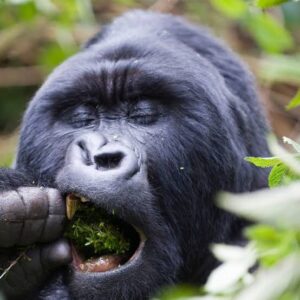
The greatest diversity of large mammals is found in the three National Parks, which are designated conservation areas. Akagera contains typical savanna animals such as giraffes and elephants, while Volcanoes, home to an estimated one-third of the worldwide mountain gorilla population.
Nyungwe Forest boasts thirteen primate species including chimpanzees and Ruwenzori colobus arboreal monkeys; the Ruwenzori Colobus moves in groups of up to 400 individuals, the largest troop size of any primate in Africa. Twenty species of mammals reported by the Animal Diversity web of the Museum of Geology University of Michigan are as under
Detailed 3-Day Rwanda Culture Tour & Wildlife Safari
Day 1: Arrival in Rwanda and tour of historical sites in Kigali
You will be met at Kigali Airport (Kanombe) by our 3-Day Rwanda Culture Tour & Wildlife Safari guide/driver who will transfer you to the Hotel booked for you in the city of Kigali. For those arriving early in the day, an afternoon tribute visit to the thousands of Rwandese that lost their lives during the 1994 Rwandan genocide can be arranged. You can also pass by the Presidential Palace Museum which was the place of residence for the Rwandan president at the time of the genocide, Juvenal Habyarimana. You will return to your hotel for dinner and overnight.
Day 2: Kigali – Rusumo Water Falls – Akagera National Park
You will have an early breakfast and then travel with your 3-Day Rwanda Culture Tour & Wildlife Safari guide to Rusumo waterfall and Imigongo, the place of traditional handcraft makers. The drive to this place is about 2½ hours. You will have lunch at your lodge and in the afternoon go for a game drive in the Akagera National Park and a boat ride on Ihema Lake to see crocodiles, hippos, and various species of rare birds around the Nyirabiyoro Island. You will have dinner and overnight at your lodge.
Day 3: Game Viewing in Akagera National Park
After an early breakfast, you will embark on a morning game drive. In a circuit, you will visit different lakes where you will see buffaloes and elephants drinking from the water ponds and see various species of birds like Egyptian goose and fish eager. You will have a picnic lunch in the park then continue with the hills game drive where you will see; impalas, zebras, bushbucks, waterbucks, topis, oribis, baboons, giraffes, cape elands among others. En route, you will go through the beautiful rolling hills up to the northern exit of the park from where you will be transferred to the airport for your departure flight.
End of 3-Day Rwanda Culture Tour & Wildlife Safari
[contact-form-7 id=”1aeeaea” title=”Client Inquiry Form”]
[captainform id=”1349491″]
When to Go on 3-Day Rwanda Culture Tour & Wildlife Safari?
The Rwanda Mini Film Festival
March: Held annually in March the Rwanda Mini Film Festival allows amateur film makers from around Rwanda to showcase their talents. Entry is open to everyone, including students, professors, novices and established filmmakers, who are shown in several different categories. The festival takes place in many different venues across Kigali so interested travelers will have to keep an eye out for schedules closer to the time. The event is a great one to attend as the short films tend to highlight issues of people on the ground and provide great insight into the country.
Gorilla Naming Ceremony (Kwita Izina)
June: An interesting festival worth attending, the Gorilla Naming Ceremony is held every June in Kiningi. This ceremony is influenced by a similar one for humans during which all members of the local Rwanda community recommend names for a newborn child. In this version, it is the park guides who do the suggesting and ultimately choose the names of all the newly born gorillas. The ceremony is characterized by great displays of music and traditional dance and travelers who attend the festival can even choose to sponsor a gorilla if they like.
Hollywood Film Festival
July: Another popular film festival, Hillywood is aimed at showcasing Rwanda’s budding film industry in the hope that it will one day rival a similar industry in Nigeria. Held every July, the festival highlights the talents of filmmakers from across the African continent. There are several activities including screenings, workshops and discussions on the films by their directors and actors. Anyone interested in learning more about local culture, or simply looking to catch a good film, should make a point of attending.
Centre X Centre Festival
August: Newly renamed, the Centre X Centre Festival is an annual celebration of Rwandan theater which takes place every August in Kigali. Every year the festival has a theme which is generally related to the ideas of Arts and Peace. The messages of most pieces stem from the effects of the Rwandan genocide and are quite powerful. It is the hope that the theater festival not only forms the ground for critical discussion but is also a process of healing.
Kigali Up! Rwandan Music Festival
September marks the arrival of the lively outdoor music festival in Kigali. The event aims to bring together local artists from several different genres including traditional folk music, R&B and Rwandan Pop. There are also many international stars who grace the stage every year. The aim is to cross genre divides to create a community of artists who collaborate to make the county’s music industry even stronger than it already is.
Festival Arts Azimuts (FAAZ)
October: Rounding off Rwanda’s festival calendar is the Festival Arts Azimuts in October. A feast of the arts, FAAZ brings together dancers, musicians, theater makers and visual artists from both Rwanda and abroad. There are also many renowned speakers who are invited to give talks to inspire the values of love, hope and faith in the festival goers.
Latest Africa Safari Updates
How to Combine Kenya and Rwanda in One Safari
How Can I Combine Kenya and Rwanda in One Safari? How to Combine Kenya and […]
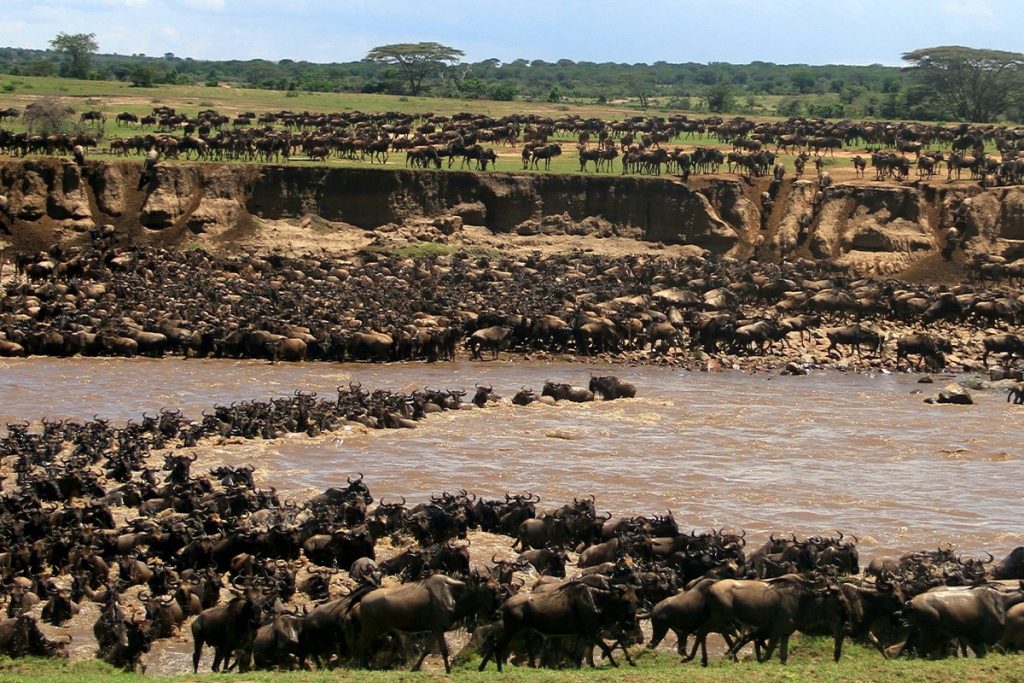
Best Time to Visit Kenya, Tanzania, Rwanda & Uganda Safari
What Is the Best Time to Visit Kenya, Tanzania, Rwanda and Uganda for Safari? Best […]

Rwanda Safari with Uganda Gorilla Trekking
Rwanda Safari with Uganda Gorilla Trekking. A Rwanda safari combined with Uganda gorilla trekking is […]

Why Visit Tanzania?
Why Visit Tanzania? Tanzania stands among Africa’s most extraordinary safari and adventure destinations, offering unmatched […]

Walking Safaris and Photography Adventures in Serengeti
Introduction to Walking Safaris and Photography Adventures in Serengeti Walking Safaris and Photography Adventures in […]

Walking Safaris and Birdwatching in Serengeti
Walking Safaris and Birdwatching in Serengeti Walking Safaris and Birdwatching in Serengeti create some of […]

When is the Best Time to Visit Masai Mara National Reserve
Discovering the Timeless Magic of Masai Mara National Reserve The Masai Mara National Reserve in […]

When is the Best Time to Visit Ngorongoro National Park
Exploring the Timeless Beauty of Ngorongoro National Park Ngorongoro National Park is a world wonder […]
Location of Tree-Climbing Lions in East Africa
Exploring the Mystery of Tree-Climbing Lions in East Africa Among Africa’s most extraordinary wildlife behaviors […]