

In Uganda, forests and woodlands cover approximately 4.9 million hectares in Uganda, about 24% of the total land area. The vast majority of this is woodland (19%), while the rest is tropical moist forest (5%) and forest.
The total forest reserve area is estimated at 1,277,684 hectares, of which 99.6 % is under the Central Forest Reserves while 0.4% is on Local Forest Reserves.
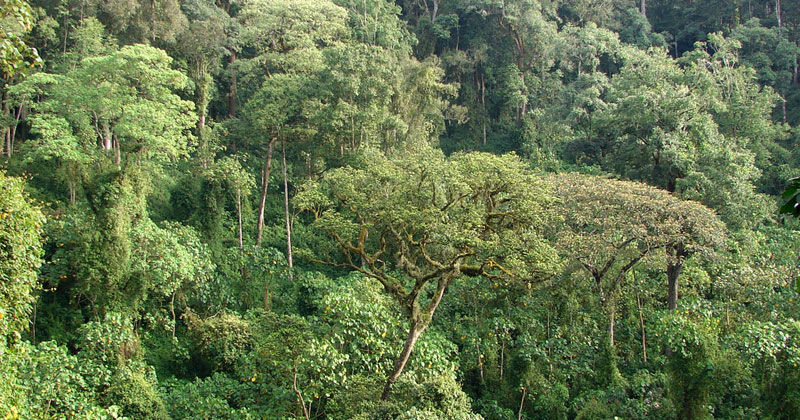
National Forestry Authority is the lead agency mandated to manage all 506 Central Forest Reserves in Uganda.
Uganda offers six principal indigenous/natural forest reserves for harvesting with hardwood species such as Chlorophora excelsa, Celtis, Maesopsis eminii, Entandrophragma, Cynometra Alexandria, Lovoa brownii, and Newtonia buchanani.
The following are the main protected forest reserves in Uganda
- Budongo forest reserve
- Bugoma Forest Reserve
- Bwindi Impenetrable Forest
- Echuya Uganda Forest Reserve
- Kalinzu Forest Reserve
- Kasyoha-Kitomi Forest Reserve
- Kibaale Forest
- Lutoboka & Bunjazi Forest Reserves
- Mabira forest
- Maramagambo Forest
- Mpanga Forest Reserve
- Mt Elgon Forest Reserve
- Rwenzori Forest Reserve
- Sango Bay Forest Reserve
Mabira Forest
The forest is located in Buikwe District 54 km on the Kampala/Jinja Highway and only 20km from Jinja. It is one of the last remaining rainforests and the biggest in Central Uganda. The forest covers a total area of 300nsq km. It has been a protected forest since 1932. It is home to many endangered species of trees and primates and the only remaining forest within easy reach of the urban areas of Kampala. Jinja and Entebbe.
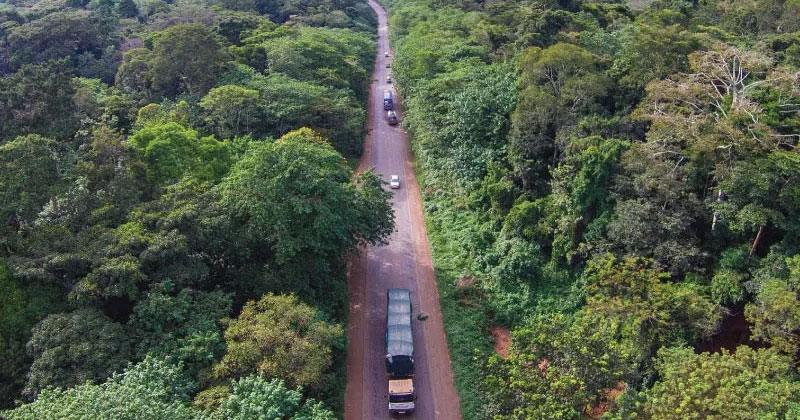
Deforestation plans
The Sugar Corporation of Uganda Limited jointly owned by the Government of Uganda and by the Mehta Group has put a request to the government to be allowed to clear one-third of the Mabira Forest for sugarcane plantations. This will involve the government de-gazetting the land and transferring it to SCOUL. The government has far supported this plan.
The deforestation plans have been disputed within Uganda and by the environmentalists, the environmentalists fear the loss of hundreds of endangered species, increased erosion, the damage to livelihoods of local people, and negative impacts on water balance and regional climate. The cabinet paper indicates the project would generate 3,500 jobs and contribute to the treasury.
The Kabaka of Buganda is opposed to the deforestation plans and has offered alternative land for sugarcane production. The Anglican church of Mukono has also offered land
However, the recent statements from the Government indicate that the plan of de-gazetting the land has not yet been shelved.
Tourist activities
- Specialty bird watching,
- Environmental Education (Study Tours)
- Camping
- Nature walk
Bwindi Impenetrable Forest
Bwindi Impenetrable Forest which covers an area of 330 km2 is found in South Western Uganda in Kanungu District on the edge of Western Rift Valley. The forest is along the border of Uganda and the Democratic Republic of Congo and is 530 km from Kampala City. It is a forest in the Virunga Volcanoes mountain ranges.
Vegetation
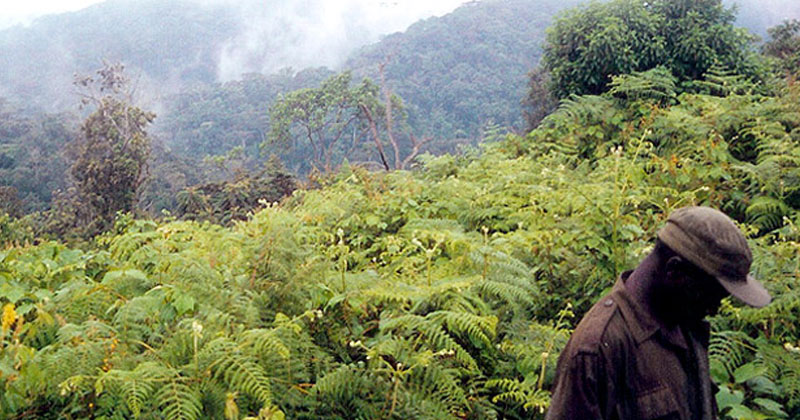
Bwindi’s Impenetrable Forest is a typical African Jungle with dense undergrowth, vines, and other vegetation that make it almost ‘impenetrable’. The lowland rainforest and montane forest vegetation continuously struggle to reach heights that will allow them to receive more light. Huge trees are garlanded with creepers and parasitic plants. Giant thickets of bamboo thrive in the humid atmosphere.
Importance of the forest
The forest, a protected area, known as Bwindi Impenetrable National Park is home to over half of the world’s population of highly endangered Mountain Gorillas. About 340 Bwindi Gorillas, 360 bird species and a number of butterfly species and small mammals live in this national park.
Kalinzu Forest Reserve
Kalinzu forest is in Busheyi District, 10 kilometers west of Ishaka Town on the main Mbarara to Kasese Highway. Kalinzu is a natural forest in Bushenyi District – western Uganda. Pitched on top of an escarpment on the eastern edge of the Great Albertine Rift Valley and the forest reserve is 147 Sq.Km adjacent to Queen Elizabeth National Park and the Maramagambo Forest. Kalinzu Forest lies at an average altitude of 1,400 m above sea level it covers 399 km2
Importance of Kalinzu forest
Wildlife in the forest includes 378 species of birds such as the Great blue Turaco, Black and White Casqued hornbill, Cuckoos, and Sunbirds. It enjoys six different species of primates including the blue Monkeys and chimpanzees.
Vegetation
The Forest is famous for the variety of species of trees and shrubs including the ficus, Prunus African, the Strobia, and partner.
Tourist sites
From the forest trails, amazing views open up over the Rwenzori Mountains, Lake Edward, the Kazinga Channel, and the Congo. Visit the “old man of the hills”. Kalinzu forest is steeped in mysteries and rich with local legends. One can learn about the folklore and uses of the forest from a local guide.
Tourist attractions in Kalinzu Forest Reserve
Kalinzu forest offers visitors a choice of scenic guided walks along the ridges and valleys of the Rift Valley escarpment.
Amazing views of the Rwenzori Mountains, Lake Edward, the Kazinga Channel, and the Congo.
Visit the “old man of the hills”. Kalinzu forest is steeped in mysteries and rich with local legends. Learn about the folklore and uses of the forest from a local guide.
The Forest is home to 378 species of birds such as the Great blue Turaco, Black and White Casqued hornbill, Cuckoos, and Sunbirds. It enjoys six different species of primates including the blue Monkeys and chimpanzees.
Nocturnal primates like pottos, galagos, owls, and other animals only emerge under the cover of darkness and listen to the errie shrieking of the tree hyrax.
Eco-tourism site
Kalinzu forest reserve is an ecotourism site of natural forest teeming with 414 species of trees and shrubs, 378 species of birds such as Great Blue Turaco, Sun Birds, and Black and White Casket. Six different species of primates are found here Blue Monkey, Vervet Monkey, Black and White Colobus, and Chimpanzees.
Kibale Forest Reserve
Kibale Forest with an area of 760 km2 is located in western Uganda and is 26km from Fort Portal Town.
Importance of Kibale Forest Reserve
The forest is home to many species of wildlife which include elephants, leopards, chimpanzees, Olive Baboons, Black and white Colobus, blue monkeys, the grey-cheeked mangabeys, and red-tailed monkeys, pottos and bush babies, butterflies, reptiles with amphibians.
Vegetation
The dominant vegetation is rainforest interspersed with patches of grassland and swamps. All the vegetation types are rich in flora and fauna. It is a home of ancient trees growing up to 55m in height.
Attractions
The forest is home to primates including Chimpanzees as well as the black and white colobus, red-tailed monkey, and grey-cheeked mangabey. A community of chimpanzees has been habituated since 1991. There are over 375 species of birds for those who are bird lovers.
There are over 70 mammal species and over 250 species of butterflies that are present in the forest. The forest is also home to East Africa’s largest population of the threatened red colobus and the rare I’Hoest’s monkey.
Maramangambo Forest
Maramagambo Forest is located in Bushenyi District and is 376 km from Kampala City, the capital of Uganda. The forest lies in the southern part of Queen Elizabeth National Park (QENP) in western Uganda.
Vegetation
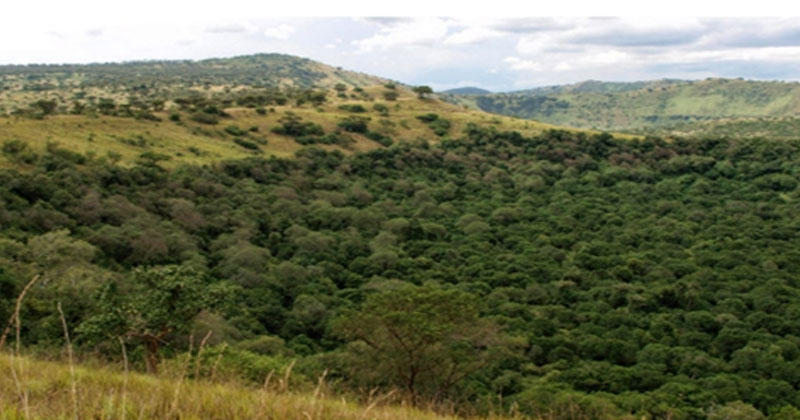
The vegetation of the forest includes tropical forest, medium-altitude moist, and semi-deciduous forest. The forest is among the largest forests in Uganda.
Importance of the Forest
The forest also houses the largest population of Chimpanzees in East Africa.
Attractions
Mammals include chimpanzees, red-tailed monkey, giant forest hog, potto, bush baby, baboons, pygmy antelope, yellow-backed duiker, giant elephant shrew, and L’Hotse’s monkey.
Bird species including Dark capped yellow warbler, fawn breasted waxbill, black-headed batis, sulphur breasted bush shrike, bat hawk, red-tailed bristle bill African green pigeon, and Ross’s turaco.
- The forest has lakes and craters.
- The forest is home to many species of butterflies and moths
- It is a home of bats.
Mpanga Forest Reserve
It is a compact forest located near Mpigi Town 37 km from Kampala City on the Kampala Masaka Highway. It has been a protected facility since 1953 as a scientific research site. The forest occupies an area of 45 sq km.
Importance of the forest
The forest is recorded to have over 500 tree and shrub species. Some trees in the forest are estimated to be over 100 years. The average height and size of some trees are quite impressive, it has over 200 bird species and including the following animals:
Bushbuck
Red-tailed monkey
Flying squirrels
There are also several species of butterflies within the forest.
Tourist activities
A visitor can do any of the following activities:
- Hill climbing
- Forest walk
- Walk trails
- Guided visits to Kiganda shrines,
Budongo Forest Reserve
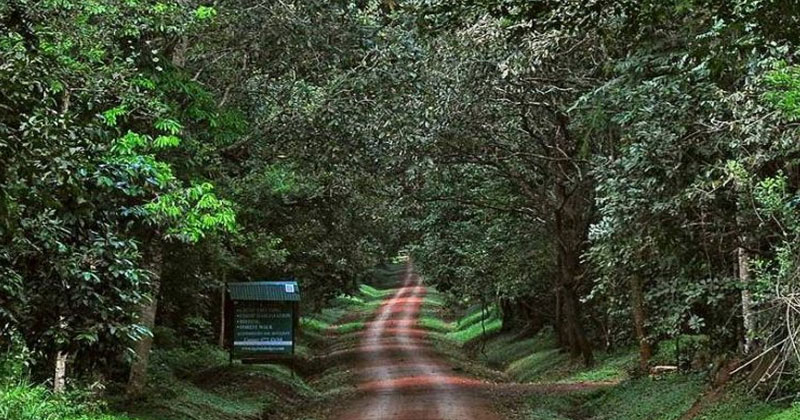
The forest covers the districts of Hoima, Masindi, and Buliisa in Western Uganda and it is about three hour’s drive from Kampala City. The 825 square km forest reserve is located within the boundaries of Murchison Falls National Park.
Importance of the forest
It is the largest Mahogany forest in East Africa with incredible biodiversity which includes over 24 small mammals, 9 primates, 465 species of trees, 360 species of birds, 289 species of butterflies, and 130 species of moths among others.
Tourist sites
The tourist sites include Kaniyo Padidi Ecotourism Site and Busingiro Ecotourism Site.
Vegetation
The vegetation of the forest is mainly tropical forest and grassland.
The danger facing the forest
The continued existence of the forest for enjoyment by future generations is threatened by the high level of illegal pit sawing, illegal hunting, and human encroachment on the forest reserve.